Golden Circle Adventure Tours: Snowmobiling, Snorkeling, and Northern Lights
Most travelers treat the route out of Reykjavik as a gentle sightseeing loop, stopping for twenty minutes to photograph a waterfall before climbing back onto a warm coach. That is fine if you just want photos for your mantlepiece, but pairing geysers with adrenaline shifts the entire character of south Iceland. Booking a trip that pairs the classic stops with an evening chase for the golden circle and northern lights turns a standard day trip into a 14-hour marathon across ice sheets, tectonic rifts, and pitch-black lava fields.
You can plunge between continents in near-freezing glacial water before lunch, ride across a frozen ice cap in the afternoon, and end your night freezing in a gravel layby waiting for solar particles to ignite the sky. It sounds exhausting because it is. Still, packing these high-octane golden circle activities into a single itinerary saves hours of backtracking along Route 1. Here is what actually happens when you bolt serious outdoor adventures onto Iceland's most famous driving circuit.
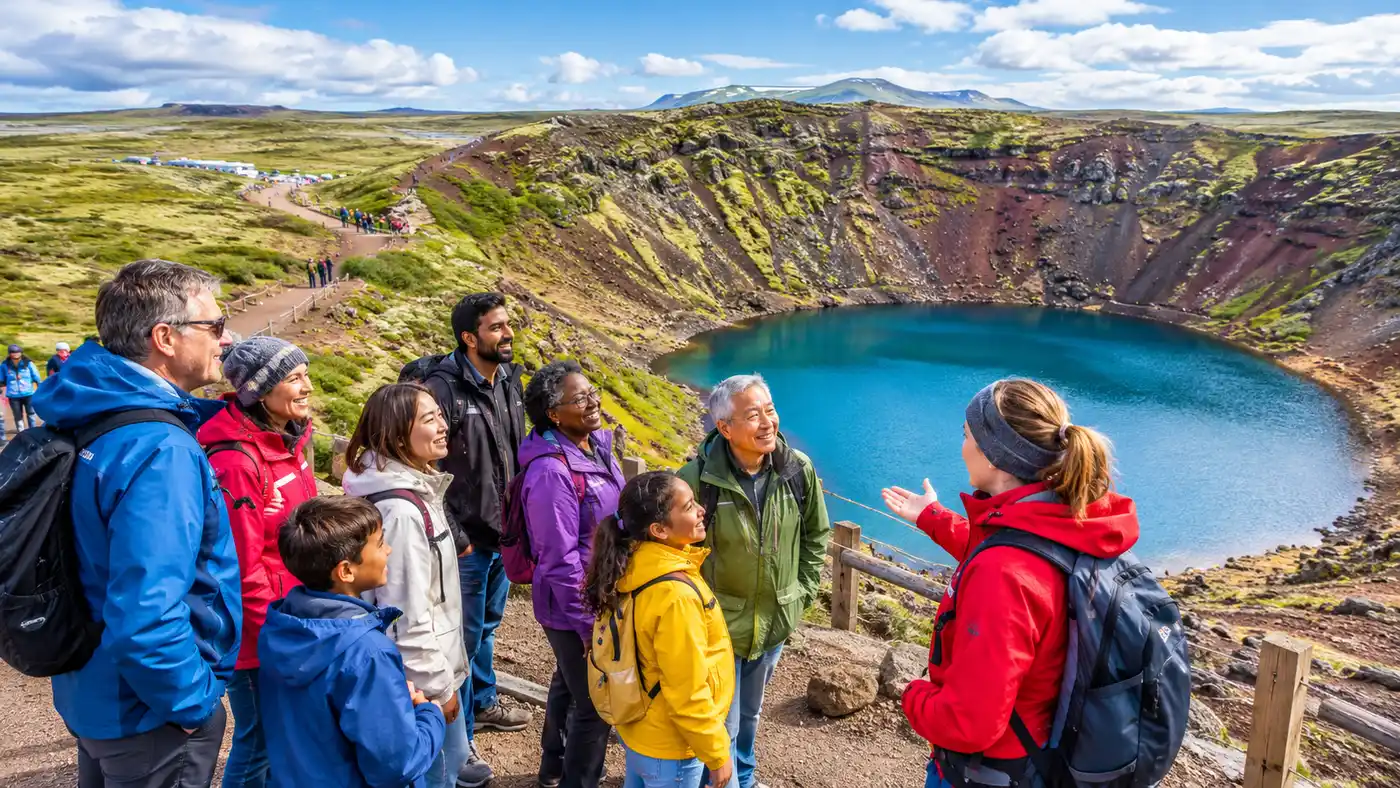
Book your kerid crater iceland experience:
Glacier Ripping: Golden Circle with Snowmobile on Langjökull
The transition from mossy lowlands to the foot of Langjökull takes you off paved tarmac and onto rocky mountain tracks. Most tours running a golden circle with snowmobile leave their highway coaches at Gullfoss waterfall, where passengers transfer into monstrous superjeeps fitted with 46-inch tires. These vehicles deflate their rubber slightly to float over deep drifts, churning through slush for roughly 35 minutes until they reach the base camp hut perched directly on the glacier flank.
At the hut, guides bundle you into heavy, insulated snowsuits, balaclavas, helmets, and thick mittens. The gear smells faintly of stale snow and waterproof spray, but you will be grateful for every single layer. Langjökull is the second-largest ice cap in Iceland, spanning roughly 935 square kilometers, and the weather at the summit changes within minutes. On a clear day you can see mountain ranges stretching toward the interior Highlands. When a squall blows in, you cannot see the red taillight of the snowmobile three meters ahead of you.
Riding a snowmobile gullfoss tour requires surprising physical input. Steering these machines across hard-packed ice or windblown ridges takes real shoulder effort, especially when crossing frozen ruts carved by tracked vehicles. Drivers must show a valid physical driver's license, while passengers sit behind, clinging to heated grab handles. The throttle is a simple thumb lever on the right handlebar. Push it down, and the machine surges forward with a guttural roar, flinging rooster tails of frozen powder behind you.
Pro tip: Tuck a chemical hand warmer inside your glove liners right against the back of your hands. The snowmobile grips heat your palms decently, but your knuckles take the full brunt of 50 km/h glacial headwinds.
You spend about an hour on the ice itself. That includes a brief mid-point stop where the engines cut out, leaving a ringing silence that feels almost heavy. If you get lucky with visibility, the ice seems endless, a rolling desert of pure white sculpted by sub-zero winds. Then you hammer the throttle back to camp, strip off the heavy suits with aching forearms, and rejoin the heated superjeep.
Drifting Between Continents: Snorkeling Golden Circle at Silfra
Few things sound less appealing on a sub-zero morning than stripping down to thermal underwear in a Thingvellir car park to prepare for swimming. Snorkeling golden circle trips visit the Silfra fissure, a deep crack between the North American and Eurasian tectonic plates filled with melted runoff from Langjökull. The water takes between thirty and a hundred years to filter through porous underground lava fields before bubbling into the lake. It is filtered so thoroughly that underwater visibility regularly exceeds 100 meters.
Getting dressed is an ordeal. You step into an insulated onesie called an undersuit, followed by a thick neoprene drysuit that fits tightly around your wrists and neck. The neck seal can feel suffocating at first. Guides pull it snug to ensure icy water does not leak in, because if water enters the suit at 2°C, your swim ends immediately. Neoprene mittens and a separate hood leave only a tiny oval of your forehead and lips exposed to the element.
Note: Drysuits provide massive positive buoyancy, meaning it is physically impossible to dive beneath the surface without heavy weights. Do not try to swim down; just float flat on your belly and let the gentle current push you along.
The moment you step down the metal ladder into the fissure, your face hits the water and your breathing catches. It feels like dozens of cold needles pressing into your skin for the first sixty seconds. Then your lips go numb, your nervous system accepts the shock, and the underwater panorama takes over. Deep chasms drop into electric blue canyons, framed by bright green algae known as troll hair clinging to razor-sharp basalt.
The swim lasts roughly 35 to 40 minutes, moving through sections named the Big Crack, Silfra Hall, and the Cathedral. The water tastes sweeter than anything from a tap, mineral-pure and utterly clear. When you finally climb out at the exit platform, your fingers will feel stiff and clumsy, making unzipping the heavy suits an Olympic sport. Guides usually hand out styrofoam cups of cheap instant hot chocolate immediately afterward, and it genuinely tastes like the best drink on earth.
Chasing Aurora: Gullfoss Northern Lights and Evening Hunts
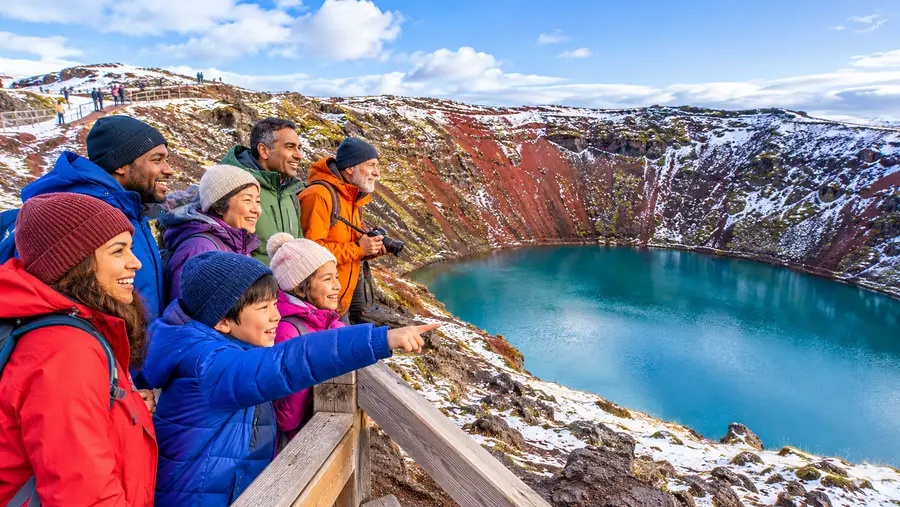
Combining daytime adrenaline with an evening hunt for the aurora borealis requires patience and dark skies. Golden circle and northern lights packages generally run their daytime loop backwards or delay their departure so that your time near the mountains coincides with nightfall. If solar activity spikes while you are still near the falls, catching the gullfoss northern lights is an unforgettable sight, with green ribbons dancing across the spray rising from the canyon rim.
Seeing the lights is never guaranteed. Auroras depend on space weather, solar winds, and clear skies overhead. Tour operators monitor satellite data from the Icelandic Meteorological Office obsessively, checking the Kp-index and cloud cover maps hourly. If thick cloud blankets Thingvellir, your driver might barrel an hour south toward the coast or west toward Hvalfjörður seeking an unexpected pocket of clear air.
- Best viewing window: between late September and mid-April, when darkness settles completely over the landscape.
- Kp-index reality: a Kp rating of 2 or 3 is plenty to see vibrant green arches if the sky is genuinely dark and cloudless.
- Camera settings to memorize: manual mode, shutter speed set to 4-8 seconds, aperture opened wide to f/2.8, and ISO hovering between 1600 and 3200.
- Clothing discipline: wear snow boots with thick wool insoles; standing still on frozen gravel drains body heat through your soles twice as fast as walking.
Waiting is the hardest part. You will spend stretches sitting in the coach staring out into pitch-black valleys, wondering if that faint milky streak on the horizon is a stray cloud or the start of a geomagnetic storm. When the band suddenly flares into neon green and violet curtains that ripple across the stars, nobody cares about the freezing toes anymore. People shout, trip over tripods in the dark, and stare upward in total disbelief.
Book your kerid crater iceland experience:
Warming Up: Golden Circle Blue Lagoon and Northern Lights Pairings
After fighting glacial winds on Langjökull or shivering through a Silfra snorkel, submerging into naturally heated mineral water feels like a medical necessity. Many operators bundle a thermal soak directly into their adventure itineraries. A popular evening variant is the golden circle blue lagoon and northern lights combination, which routes you back down through the Reykjanes peninsula before heading into rural darkness to hunt the aurora.
The Blue Lagoon is undeniably commercial, but soaking your battered shoulders in 38°C milky silica water while drinking a cold Gull beer works wonders on sore muscles. If you prefer something less tourist-heavy and closer to the main driving route, the Secret Lagoon in Flúðir or Laugarvatn Fontana offer easier logistics. Both tap directly into local boiling springs, cutting out the ninety-minute drive across Reykjavik required to reach the Blue Lagoon. If you are weighing different thermal springs, look at our breakdown of golden circle and lagoon combo tours to see which hot spring matches your schedule.
Food during these marathon tours often gets relegated to soggy gas station sandwiches, which is a tragedy given what sits along the route. Savvy guides build an afternoon stop for the classic golden circle and friðheimar tomato farm experience into the day. Stepping into their massive, buzz-filled greenhouse feels like walking into Mediterranean summer. Thousands of tomato plants climb toward high glass ceilings lit by artificial grow lamps, warmed entirely by geothermal runoff.
Sitting on wooden benches among the vines while eating endless bowls of hot tomato soup with fresh crusty bread resets your body temperature completely. They even serve tomato-based beer and cocktails with fresh basil. It breaks the rhythm of raw nature and reminds you of how ingeniously Icelanders bend harsh volcanic geography to their advantage.
Choosing Your Adventure: Tour Comparison and Practicalities
Picking the right package comes down to your tolerance for cold, your budget, and how many hours you want to stay awake. Snowmobiling adds a high gear requirement and physical speed, while snorkeling demands mental composure in freezing water. Packing both into one day with an aurora hunt at night is possible, though it creates a grueling 12 to 14 hour day.
| Tour Style | Approx Duration | Physical Effort | Best Season | Key Requirement |
|---|---|---|---|---|
| Snowmobile + Golden Circle | 10-11 hours | Moderate | Year-round | Valid driver's license |
| Silfra Snorkel + Golden Circle | 9-10 hours | Low to Moderate | Year-round | Must be able to swim |
| Golden Circle + Lagoon + Aurora | 11-13 hours | Very Low | Sept to April | Warm layered clothing |
| Mega Combo (Action + Aurora) | 14-16 hours | High | Sept to April | Stamina and patience |
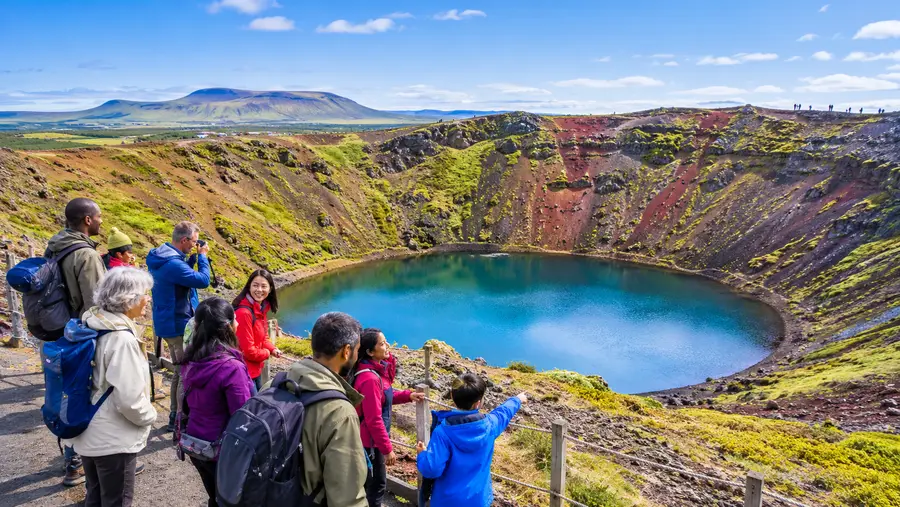
Weather dictates everything here. In the depths of January, daylight lasts barely four hours. If you tackle an adventure combo in midwinter, accept that you will see several sights in dusk or total darkness. For deep winter travel logistics and road realities, read through our visiting Kerid Crater and the Golden Circle in winter guide before locking in non-refundable dates.
Booking advice usually leans toward doing these combos early in your trip. If severe gale winds sweep over Langjökull, glacier activities get called off first. When operators cancel a snowmobile run for safety, they offer to reschedule for another day or refund that portion of the ticket. If you book for your final day in Iceland and bad weather strikes, your chance vanishes.
- Bring dry wool socks: Pack three pairs in your daypack; stepping in a freezing puddle at Gullfoss will ruin your night aurora hunt if your feet stay wet.
- Protect your electronics: Sub-zero winds drain lithium camera batteries in twenty minutes, so keep spares tucked inside your internal jacket pockets near body heat.
- Eat dense meals early: Cold environments burn calories rapidly, and tour buses rarely pause for sit-down meals unless explicitly scheduled.
Frequently Asked Questions about golden circle and northern lights
Can you see northern lights while snowmobiling on the glacier?
Rarely, but it happens. Most snowmobile tours run during daylight or twilight for trail safety, because navigation across crevassed glacier fields in total darkness is dangerous. A few specialized operators run evening snowmobile departures in midwinter under clear skies, but daytime glacier riding followed by an evening valley hunt is far more common.
What happens if the northern lights tour is cancelled due to weather?
Standard combo tours split the day into distinct legs. If the sky is overcast, the daytime golden circle and adventure portion continues as planned, while the evening aurora hunt gets cancelled. Operators almost always issue a partial refund for the northern lights segment or hand you a voucher to rebook the evening hunt on another night for free.
Is snorkeling in Silfra safe if I cannot swim well?
No. You must be comfortable floating in water and possess basic swimming skills to join a Silfra trip. Even though the drysuit keeps you buoyant, you must propel yourself with long rubber fins, clear your snorkel, and keep calm if cold water splashes your face. Operators also require a signed medical statement before letting you enter the water.
Quick Reference
- Snorkel water temp: 2°C to 4°C year-round
- Snowmobile requirement: valid car driver's license for drivers
- Aurora hunting season: late September through mid-April
- Typical combo tour length: 10 to 14 hours
Book your kerid crater iceland experience:
The Bottom Line
You can easily see the south of Iceland through the glass of a warm tour bus, nodding off between roadside gift shops and watching other tourists battle the wind. Or you can pull on a frozen drysuit, steer a snowmobile across a glacier ridge, and finish the night shivering under an emerald sky. These adventure combos are physically taxing and occasionally uncomfortable, but they turn an ordinary tourist loop into the kind of raw travel story you will tell for the rest of your life. Pack good thermal wool, charge your camera batteries, and prepare for a very long day.
Read more about kerid crater iceland.