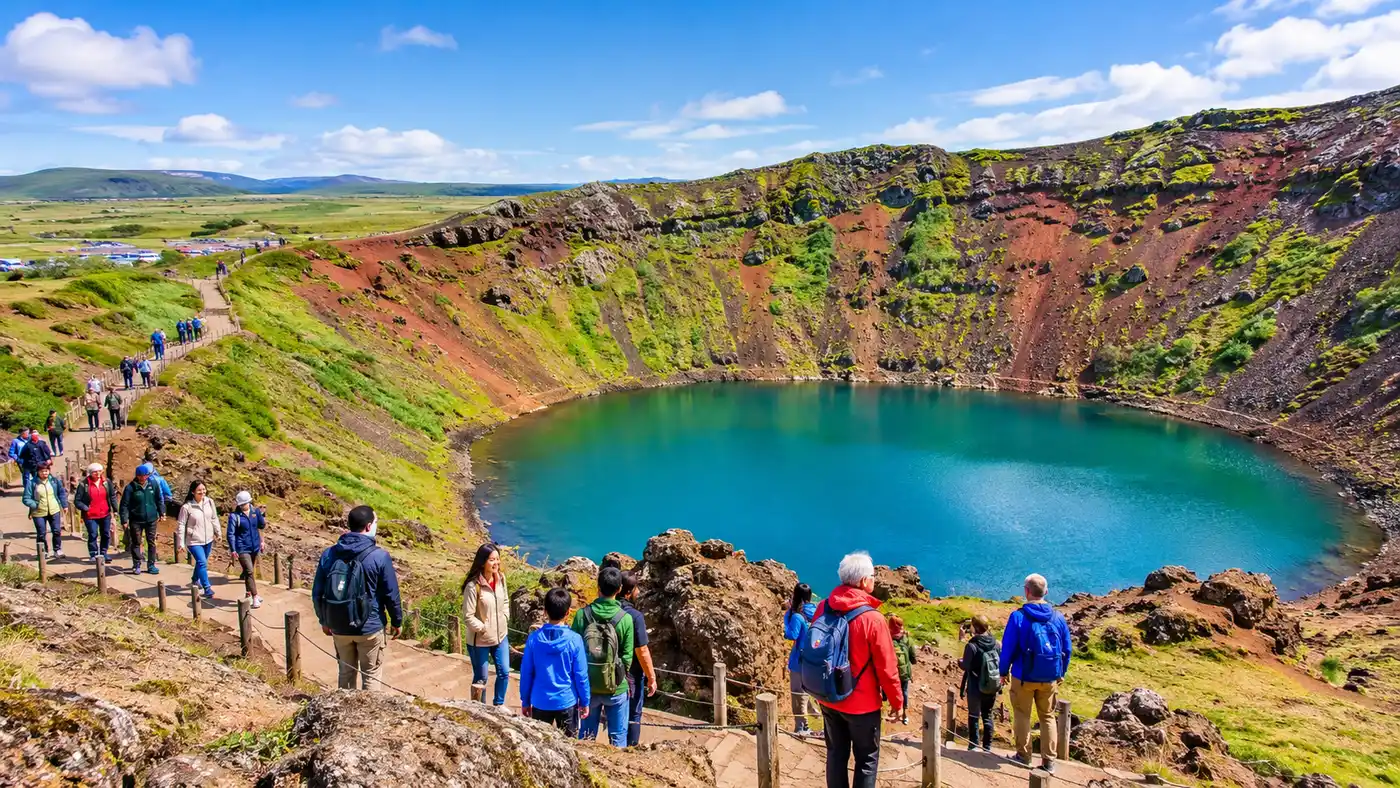
How to Visit Kerid Crater: Parking, Hours, and Directions
Most people rush through the classic southwest loop and somehow skip the giant red amphitheater sitting right next to the tarmac. That is a mistake. Figuring out kerid crater how to get there is easy enough if you have a rental car, though public transit is a different story altogether. The rust-red volcanic rock against the turquoise water at the bottom looks unreal in person, almost like someone dropped an alien lake into the Icelandic moss.
I stopped here for the first time on a damp Tuesday afternoon after getting thoroughly soaked at Gullfoss. The sun came out for about eleven minutes, lit up the caldera slopes, and made the whole detour worth every single drop of rain. Getting your logistics straight before pulling out of the capital will save you time, gas, and a fair bit of road frustration.
Book your kerid crater iceland experience:
Driving Directions and the Kerid Crater Address
The site sits along Route 35, roughly 15 kilometers north of Selfoss. If you punch the official kerid crater address - Klausturholar, 801 Selfoss, Iceland - into Google Maps or Waze, it drops you directly at the ticket booth. The roads are entirely paved all the way from Reykjavik. You do not need a four-wheel-drive vehicle in summer, not even close. A tiny front-wheel-drive hatchback handles Route 35 without breaking a sweat.
Coming straight from Keflavik after a red-eye flight? Driving from reykjavik airport to golden circle territory takes about an hour and twenty minutes before you even reach the edge of town, depending on how long you stand around waiting for rental keys. Take Route 41 into Reykjavik, pick up Route 1 heading east over the mountain pass toward Hveragerdi, and turn left onto Route 35 just before you cross the river bridge into Selfoss. If you smell heavy sulfur in the air near Hveragerdi, do not worry about your car radiator, because the steam vents on the hillside are purely volcanic.
If you are already doing the loop clockwise, heading from gullfoss to kerid crater takes roughly 45 minutes along Route 35 south. You just cruise past farmland and summer cabins. It is a straight, relaxing shot south, though sheep occasionally wander onto the gravel shoulders to stare down oncoming traffic.
Note: Winter driving is a different beast entirely. Route 35 gets cleared regularly, but high winds near the crater can blow loose snow across the asphalt within minutes, causing sudden black ice.
Kerid Crater Parking and Arrival Details
The kerid crater parking area sits right off Route 35. You turn directly off the highway onto a short gravel spur that opens into a wide, flat dirt lot. It holds perhaps 50 or 60 passenger cars, along with dedicated bays on the southern edge for tour buses. Finding a space in the main kerið car park is rarely a nightmare, but noon in July feels chaotic when three 50-passenger coaches unload at once.
Tourists spill out, wander toward the wooden ticket shack, and suddenly the quiet crater rim looks like a train terminal. Wait ten minutes. The tour bus crowds move in tight packs, snap selfies at the top rim, and leave almost as fast as they arrived.
Pro tip: Back your car into the parking bay if the wind is howling. Car doors in Iceland get caught by rogue gusts and bent backwards against hinges all the time, which rental insurance almost never covers.
You pay your entrance fee right at the wooden shed before stepping onto the path. The private landowners charge 600 ISK per adult - about $4.50 depending on the exchange rate - which goes toward maintaining the timber steps and trail rope boundaries. You can read my complete breakdown on pricing and card payments in the Kerid Crater entrance fee and ticket guide before pulling out your wallet. Yes, they take contactless cards and Apple Pay right there at the turnstile.
Facilities at the kerid parking lot are minimal. There are basic portable toilets near the entrance, but they can be hit or miss on cleanliness by late afternoon. If you need a clean restroom and a flat white, hold out until you hit the bakeries in Selfoss or the visitor center at Geysir.
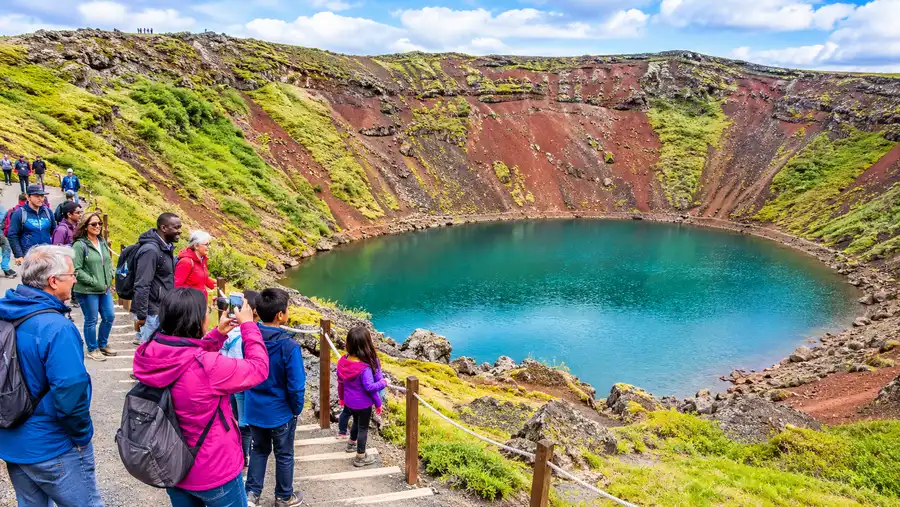
Route Distances, Drive Times, and Transit Options
Mapping out the drive helps keep your day on schedule, especially if you plan to link multiple stops into a single daylight window. Here is how the distances shake out from key spots around the region:
| Starting Point | Distance | Drive Time | Primary Road |
|---|---|---|---|
| Reykjavik City Center | 69 km | 55 minutes | Route 1 to Route 35 |
| Keflavik International Airport | 118 km | 1 hr 35 mins | Route 41, Route 1, Route 35 |
| Thingvellir National Park | 40 km | 35 minutes | Route 36 to Route 35 |
| Geysir Geothermal Area | 47 km | 40 minutes | Route 35 South |
| Gullfoss Waterfall | 56 km | 48 minutes | Route 35 South |
| Selfoss Town Center | 15 km | 14 minutes | Route 35 North |
Can you take public transit? Honestly, not practically. There is a public bus reykjavik geysir route run by Straeto (Bus 51 to Selfoss, then connecting buses), but the rural schedules are thin, infrequent, and rarely line up for casual sightseers. You end up stranded for three hours waiting for a return leg along an empty highway shoulder. If you do not have a rental car, booking an organized day tour is far smarter than trying to piece together municipal buses in rural Iceland.
For independent drivers plotting a full loop, look at our detailed Golden Circle self-drive route map to see how to string Kerid together with the national park and the hot springs without doubling back on yourself.
Book your kerid crater iceland experience:
Kerid Crater Hours and When to Go
What are the official kerid crater hours? Technically, the volcanic caldera is outdoors, meaning nature does not close. However, the staffed ticket hut and official kerid crater opening hours generally run from 8:30 AM to around 9:00 PM during the peak summer months of June, July, and August. In midwinter, the ticket booth usually closes around 4:30 PM or 5:00 PM as darkness falls.
If you pull up outside staffed hours during the endless daylight of an Icelandic June midnight, the entrance gate usually has a small self-pay honesty kiosk or QR code box. You can walk the rim beneath the midnight sun. Watching the pink sky reflect off the turquoise water at 11:30 PM with zero tour buses in the gravel lot is magical.
Planning your arrival window depends entirely on crowd tolerance and light:
- Early morning (8:00 AM to 9:30 AM): Quietest daylight hours, great low-angle sun on the red slopes, parking area completely empty.
- Midday rush (11:30 AM to 3:30 PM): Large tour coaches arrive from Gullfoss and Geysir; expect full footpaths and crowded staircases.
- Late evening (7:00 PM to 10:00 PM in summer): The big buses are gone back to capital hotels; softer light makes the volcanic minerals glow.
- Winter midday (11:00 AM to 3:00 PM): Essential timing for winter trips to catch the brief window of low, golden daylight.
Navigating the Trails and Exploring the Rim
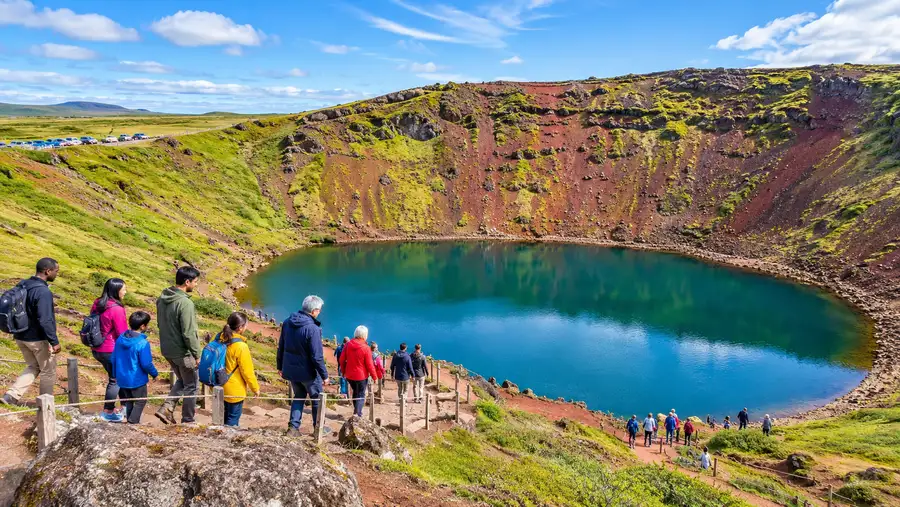
Once past the gate, you face a quick decision: walk around the upper rim first or head straight down to the water. Do the upper loop around the top edge before descending. The path circling the caldera rim stretches roughly 300 meters and takes around 15 minutes of slow walking. The red volcanic rock is surprisingly brittle, crumbling like red clay flowerpots under your boots. Stay on the designated footpath so the slopes do not wash away into the water during heavy rainstorms.
Wind hits the rim hard. Even on days when the car park feels dead calm, cresting that exposed ridge can blast you with icy gusts coming across the plains. Dress accordingly. A pair of lightweight gloves tucked in your coat pocket makes taking photos much less painful.
When you are ready, head to the wooden staircase on the western face. About 80 timber steps lead right down to water level. At the bottom, a flat bench lets you sit right next to the lake. The water level fluctuates throughout the year because it mirrors the regional water table rather than filling up from rainwater alone. It sits around seven to fourteen meters deep depending on the season. Throwing stones into the pool or trying to swim is strictly forbidden, mostly to preserve the sensitive moss and fragile shoreline ecosystem.
A few safety rules help keep the site intact for everyone else:
- Footwear choices: Wear sturdy trail runners or hiking boots with grip, as the red volcanic gravel gets slick when wet.
- Rope barriers: Respect the guide ropes along the rim edge, because undercut soil can collapse without warning.
- Drone flights: Keep drones packed away unless you hold specific permits, as high winds and close visitor proximity make them dangerous here.
- Trash etiquette: Pack every scrap of rubbish back out to the waste bins situated near the ticket cabin.
Frequently Asked Questions about kerid crater how to get there
Can you get to Kerid Crater in a standard 2WD car?
Yes. The entire route from Reykjavik along Route 1 and Route 35 is fully paved and maintained year-round. You only need a 4x4 if you are visiting in deep winter during an active snowstorm.
How long should I plan to spend at Kerid Crater?
Most travelers spend between 45 minutes and an hour. That gives you plenty of time to stroll the upper perimeter rim, walk down the wooden stairs to the water edge, and take photos without rushing.
Is there an entrance fee to visit Kerid?
Yes, admission is 600 ISK for adults, while children aged 12 and under enter free. It is one of the few natural sites on the Golden Circle that charges an entry fee because it sits on privately owned land.
Quick Reference
- Location: Route 35, 15 km north of Selfoss
- Drive time from Reykjavik: 55 minutes
- Standard hours: 8:30 AM to 9:00 PM (summer)
- Admission: 600 ISK per adult
- Parking: Free on-site gravel lot
Book your kerid crater iceland experience:
Before You Go
Visiting Kerid is one of the easiest roadside stops in southern Iceland, but it pays to visit on your own schedule. If you rent a car, aim for early morning or late dinner hours to dodge the tour bus waves entirely. Take your time walking down by the water, listen to the wind whistle over the caldera ridge, and treat the fragile red rocks with care.
Read more about kerid crater iceland.