Kerid Crater and Golden Circle Tours from Reykjavik
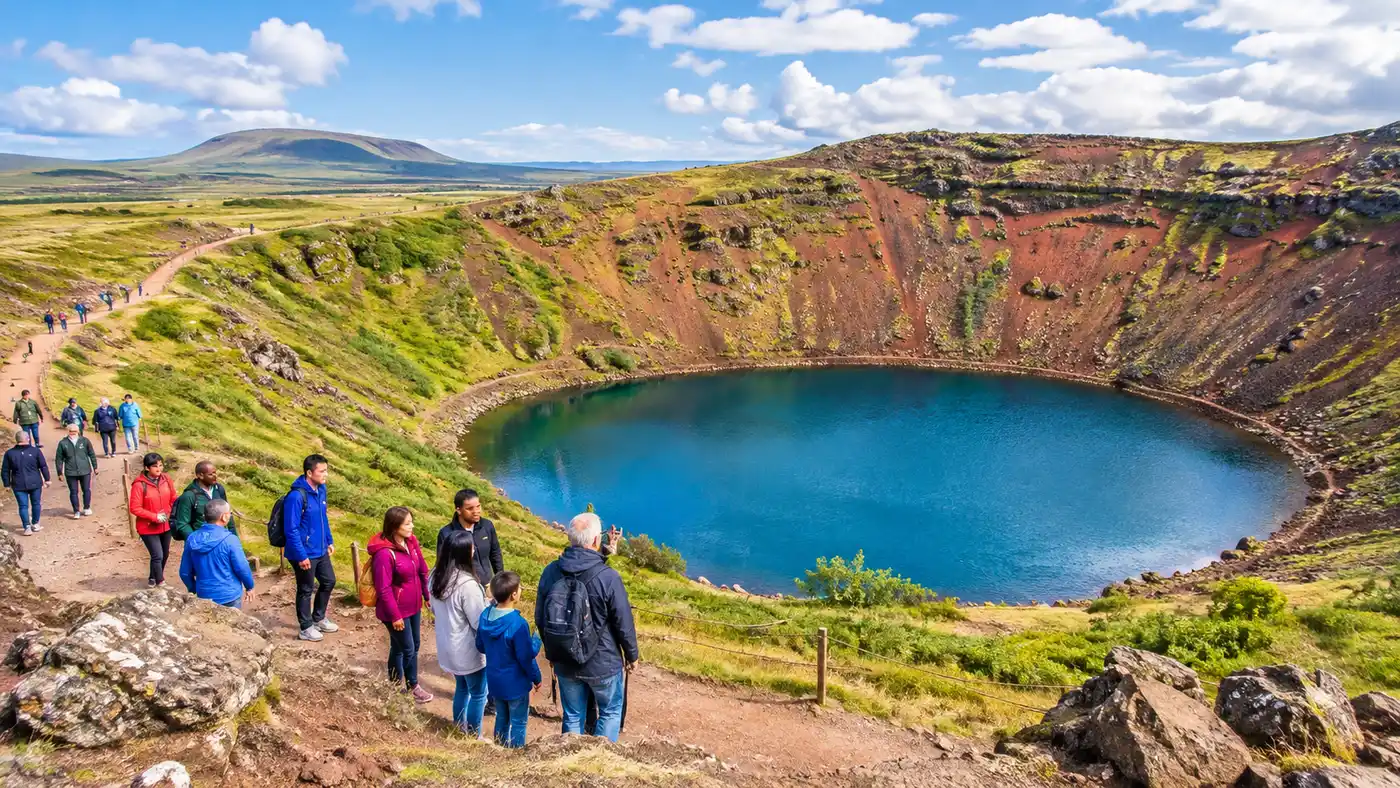
Most people land in Keflavik with a mental checklist that includes waterfalls, geysers, and maybe a soak in geothermal water. The standard loop hits Thingvellir, Gullfoss, and Geysir, which is fine, but booking a golden circle tour with kerid crater folded into the itinerary completely changes the dynamic of the afternoon. Kerid sits like an eye in the earth. The steep slopes are rust red, covered in green moss during summer, and the lake at the bottom looks opaque turquoise because of minerals leeching out of the surrounding rock. It breaks up the monotony of grey basalt and spray.
Getting out of the capital early gives you an edge. A standard golden circle day trip from reykjavik covers about 230 kilometers on paved roads, which means you spend roughly three and a half hours simply watching lupines or snowy hills roll past the bus window. Adding Kerid Crater into the mix stretches that loop by perhaps twenty minutes of actual road travel, yet so many budget operators skip it just to shave parking fees or trim an hour off their driver schedules. If you are comparing day trips, you want the full route.
Book your kerid crater iceland experience:
Why Book a Golden Circle Tour with Kerid Crater Instead of the Classic Loop?
The standard tour exists because it is cheap and easy to run. Big coach operators push the golden circle classic day trip from reykjavik because they can dump sixty people at Gullfoss, herd them back on board forty-five minutes later, and head straight back down Route 36 without paying private landowners a single krona. Kerid is private property. It was bought by a consortium of local landowners back in 1993, and they charge a small gate fee to protect the slopes from foot erosion. Because of that fee, huge budget operators often bypass it entirely.
You miss out on one of the most vivid geological contrasts in the country when they cut it out. Thingvellir is expansive, historical, and geological, but it is mostly muted earth tones, black rock, and deep water. Gullfoss is raging white water and churning brown glacial silt. Geysir smells of sulfur and features bubbling grey mud. Kerid, by contrast, hits you with vibrant red volcanic scoria. It is a collapsed magma chamber rather than an explosive crater, which explains why the bottom never drained out and left a 55-meter-deep caldera lake instead. If you want to know about the gate costs before you go, read our guide on the Kerid crater entrance fee and tickets to see how admissions work.
Pro tip: Walk down the wooden stairs to the water edge first, then hike the upper perimeter trail on your way back up. Most groups do the rim first, so moving in reverse lets you have the lakeside wooden bench to yourself for five minutes.
You actually get to touch the landscape here. At Gullfoss, you stay behind thick safety ropes while icy spray coats your glasses. At Kerid, you can step right down to the bench at the water line. The acoustic properties inside the bowl are strange and muffled. Björk once played a concert floating on a raft in the middle of the lake while listeners sat on the crater walls like an amphitheater. You cannot do that anymore, obviously, but standing down by the water gives you an eerie sense of quiet that is impossible to find at the big waterfall stops.
Comparing Tour Options: Minibus, Coach, and Private Drives
Picking how you get there matters almost as much as the stops themselves. A golden circle by minibus holds between 14 and 19 passengers. That difference sounds trivial until you pull into a restroom stop at Gullfoss alongside four 50-passenger coaches. With a smaller vehicle, your guide can adapt. If rain starts hammering the rim at Kerid, a minibus driver will often flip the stop order, swinging by the crater after lunch when the clouds lift over Grimsnes.
Big bus tours are cheaper, usually saving you twenty or thirty dollars per seat. But you will spend twenty minutes at each stop just waiting for everyone to find their seats, stow their backpacks, and figure out how to fasten the lap belts. There is also the golden circle express or golden circle afternoon departure. These truncated runs compress the loop into six hours by slicing Kerid off entirely or rushing you through Thingvellir in thirty minutes flat. Unless you have an evening flight to catch, avoid the express runs. A proper reykjavik golden circle full day tour with kerid crater takes around eight hours, and you will need every minute of it to avoid feeling harried.
| Tour Type | Group Size | Average Duration | Includes Kerid Admission? | Best For |
|---|---|---|---|---|
| Standard Coach Tour | 45 - 65 people | 7 - 8 hours | Rarely (extra add-on) | Budget travelers |
| Small Group Minibus | 14 - 18 people | 8 hours | Usually yes | Photographers and couples |
| Private Tour | 1 - 6 people | 8 - 9 hours | Yes | Families with young kids |
| Combo Tour (Kerid + Lagoon) | 16 - 20 people | 9 - 10 hours | Yes | Full day sightseers |
For those traveling in a group of four or five, a golden circle private tour from reykjavik often pencils out to roughly the same price per head as individual minibus seats. The private option frees you from the tyranny of the tour bus schedule. You can spend an hour lingering at the crater rim watching the sun change the water from navy to emerald green, or skip the tourist cafeteria at Geysir and stop at a greenhouse farm for tomato soup instead.
What the Full Day Itinerary Looks Like
Your morning begins around 8:30 with pickup in downtown Reykjavik. The city uses designated tourist bus stops - small numbered wooden posts scattered through the center - to prevent traffic jams on narrow residential streets. Once your van gathers its passengers, you head east along Route 1, climbing through the mossy lava fields of Hellisheidi where plumes of white steam rise from the geothermal power station. It looks like an alien world before you even reach the first official attraction.
Most operators make Thingvellir National Park the initial stop. You walk between the North American and Eurasian tectonic plates through the dramatic Almannagja gorge. It takes about 45 minutes to stroll from the upper lookout down past the old church and Law Rock. From there, your golden circle kerid crater route swings inland toward Haukadalur, home to Geysir and Strokkur. Strokkur erupts every six to ten minutes, sending scalding water 20 meters into the air. Stand upwind unless you enjoy sulfur-scented steam soaking your jacket.
Note: Some tour operators advertise a "golden circle day trip from reykjavik" with Kerid listed in the fine print as an optional add-on payable in cash on the bus. Always verify that your booking voucher explicitly covers the entry ticket so you do not have to dig out your credit card at the turnstile.
Gullfoss is next. The double cascade drops 32 meters into a narrow canyon, throwing up mists that produce shimmering rainbows whenever the sun breaks through. A gullfoss tour from reykjavik gives you multiple viewpoints, but the lower boardwalk path will leave you damp. After the roar of Gullfoss, you turn south through rolling farmland where Icelandic horses graze by roadside fences. Then comes Kerid.
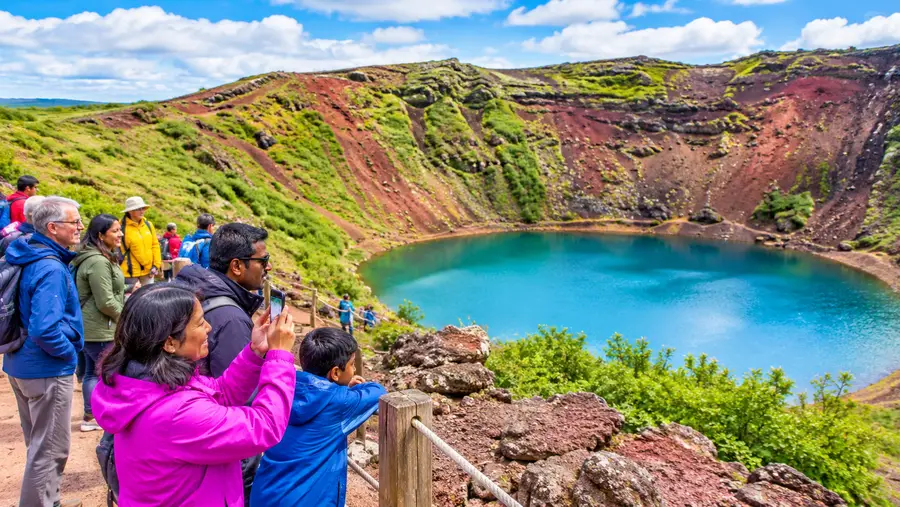
Visiting Kerid later in the afternoon works well because the tour crowds thin out after 15:00. The red earth glows warm in late afternoon light, especially between May and August when the sun sits low on the horizon for hours. You get about 40 minutes here, which is plenty of time to circle the top rim and walk down the wooden staircase to the lake edge. The path along the crest is crushed gravel and scoria, relatively flat, though the wind can whip hard across the open rim.
Book your kerid crater iceland experience:
Planning Your Golden Circle Kerid Volcanic Crater Excursion
Packing properly can save your day. Iceland's weather changes every fifteen minutes, and standing exposed on a crater lip in driving horizontal rain wearing denim is miserable. You need layers that block wind before anything else. Even in July, temperatures rarely break 16 degrees Celsius, and wind chill makes it feel colder.
- Footwear: sturdy trail shoes or waterproof hiking boots with grippy tread, because wet scoria at Kerid gets slick underfoot.
- Outer layer: a proper windproof and waterproof rain jacket with an adjustable hood rather than a fashion coat.
- Mid layers: fleece or light down sweater you can stuff into a daypack when the bus gets warm.
- Snacks: protein bars or dried fruit, since service station sandwiches on the loop cost upwards of $12 each.
- Payment method: a credit or debit card with a PIN, which is mandatory everywhere in Iceland from parking machines to toilets.
If you want to pack even more into the day, consider linking the loop with other activities. There are several golden circle adventure tours that bundle snowmobiling on Langjokull glacier or snorkeling in the Silfra fissure with the standard sightseeing route. Those combination itineraries turn an eight-hour golden circle day into an intense eleven-hour trip, but they squeeze immense value out of single daylight windows during winter.
Eating on the trail requires a tiny bit of forethought. Most coaches dump everyone at the Geysir Center, where you will find cafeteria pizza, lamb soup, and long bathroom lines. If you are on a golden circle tour from reykjavik that runs via minibus, ask the driver if they stop at Efstidalur farm instead. It is an active dairy farm on the road between Laugarvatn and Geysir. You can eat homemade ice cream or a burger while looking straight through interior glass windows into the cow barn. It feels authentic and keeps your money in the hands of local farmers.
Winter Considerations for a Kerid Crater Tour
Winter transforms the loop into a completely different animal. The days are short, with daylight shrinking to roughly four hours around the winter solstice in late December. A reykjavik golden circle day tour running between November and March requires careful pacing. Tour operators timed their departures around the brief window of pale blue dawn, leaving town around 9:00 so you reach Thingvellir just as the sunrise paints the peaks pink.
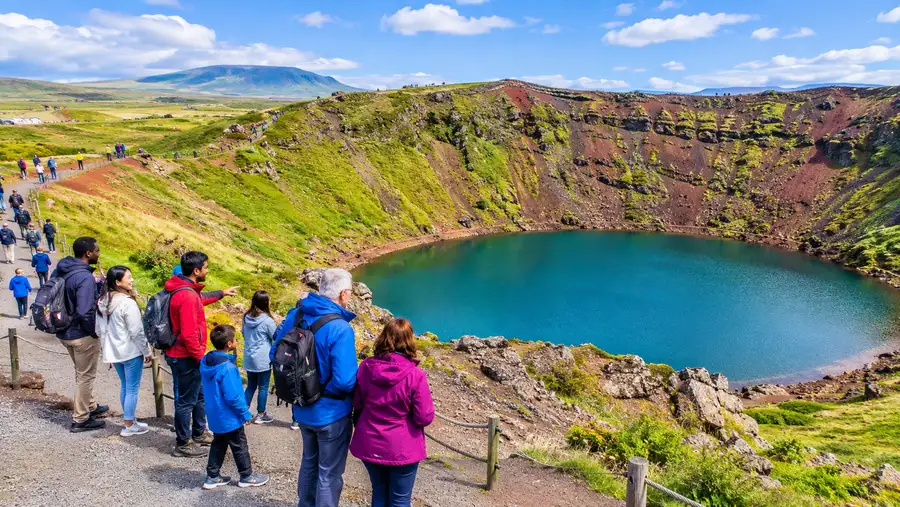
Kerid in winter looks desolate and beautiful. The caldera lake freezes solid, turning into a sheet of pale ice dusted with snow. The red volcanic rock contrasts sharply with patches of white frost, although you have to be much more careful on your feet. The wooden steps leading down to the lake often ice over completely, making them hazardous without metal crampons or slip-on traction cleats. Many guides will advise you to stay on the upper rim during freeze-thaw cycles.
Road conditions can turn nasty on the moors between Reykjavik and Thingvellir. Black ice and blowing snow are common occurrences. This is the main reason why booking a professional golden circle excursion beats driving a rental car in winter. Professional drivers run Mercedes Sprinters equipped with studded tires, VHF radios, and commercial tracking systems. You can sit back, connect to the onboard Wi-Fi, and let someone else navigate blinding snow squalls along the plateau.
Winter departures also have a small perk: you might catch the aurora on your way home. If the sky is clear and solar activity spikes while you are heading back along Route 1 toward the city, your guide might pull off at a dark rest area near Hellisheidi to watch the green ribbons dance over the lava fields. It turns a golden circle afternoon ride into something unforgettable.
Frequently Asked Questions about golden circle tour with kerid crater
How long is a golden circle full day tour with kerid crater?
Most full-day itineraries run between seven and eight and a half hours, depending on road conditions and how long your group lingers at lunch. Adding Kerid to the three traditional stops extends the driving route by only about 20 minutes, giving you roughly 40 minutes on site to explore the crater.
Is the entrance fee to Kerid included in the tour price?
On small group minibus tours, the entrance fee is almost always included in your ticket. On larger budget coach trips, check the inclusions carefully because some operators advertise low base prices and require you to pay the 600 ISK entrance fee at the gate.
Can you walk all the way down to the water at Kerid?
Yes, a set of wooden steps leads from the rim down to the edge of the crater lake. It takes about five minutes to walk down, and there is a small path and wooden bench near the shoreline where you can sit and look up at the caldera walls.
Is the tour suitable for kids and seniors?
The terrain at Kerid, Thingvellir, and Geysir is mostly flat gravel paths with occasional stairs. Anyone with basic mobility can manage the walk to the viewpoints, though visitors with limited mobility might want to view Kerid from the upper perimeter rather than descending the stairs to the lake.
Quick Reference
- Distance: 230 km round trip from Reykjavik
- Duration: 7 to 8.5 hours
- Stops: Thingvellir, Gullfoss, Geysir, Kerid Crater
- Crater Depth: 55 meters to lake surface
- Best vehicle: Minibus (fewer crowds, faster stops)
Book your kerid crater iceland experience:
Which Tour Should You Pick?
If you have only three or four days in Iceland, taking a golden circle kerid volcanic crater trip makes absolute sense. It gives you an unhurried look at tectonic rifts, glacial water, boiling earth, and dormant volcanic crust without needing to drive for hours into the Highlands. Go for a small minibus tour if your budget allows it. The difference between traveling with fifteen people versus fifty-five is the difference between feeling like a guest on a road trip and feeling like cargo. Pack a waterproof shell, lace up your boots, and do not skip the walk down to the water line at Kerid.
Read more about kerid crater iceland.